How a Nashville Manufacturing Plant Replaced Vending Machines With a Micro Market

Alex Zubkov
The Problem With Traditional Vending
The facility employs roughly 75 people across multiple shifts. Employees were spending breaks driving off-site to grab food, which meant longer breaks, more windshield time, and less actual downtime to recharge.
The vending machines offered limited variety — the same 30 items rotating through the same slots month after month. The bigger issue was fresh food. Manufacturing work is physical. Employees wanted real meals during their shifts — sandwiches, salads, yogurt — not just bags of chips. Traditional vending machines can't hold fresh food safely, and the few that try are notorious for items expiring behind the glass.
What Is a Micro Market (And How Is It Different)?
A micro market is an open, self-service food and beverage station installed in a breakroom or cafeteria. Think of it like a small convenience store — shelving, coolers, a freezer, and a self-checkout kiosk — except it's inside your building and fully managed by an outside provider.
Micro Market vs. Vending Machine
Variety: A vending machine holds 30–40 items. A micro market carries 200+ products across shelves, coolers, and freezers — including fresh food that vending machines simply can't support.
Fresh food: Refrigerated coolers hold sandwiches, wraps, salads, fruit cups, and yogurt. A freezer section carries frozen meals, pastries, and ice cream.
The experience: Employees pick items up, read labels, compare options, and check out at a kiosk — just like a regular store. No items getting stuck behind glass.
Cashless: A self-checkout kiosk handles credit cards, debit cards, Apple Pay, and Google Pay. The technology tracks every transaction and manages inventory automatically.
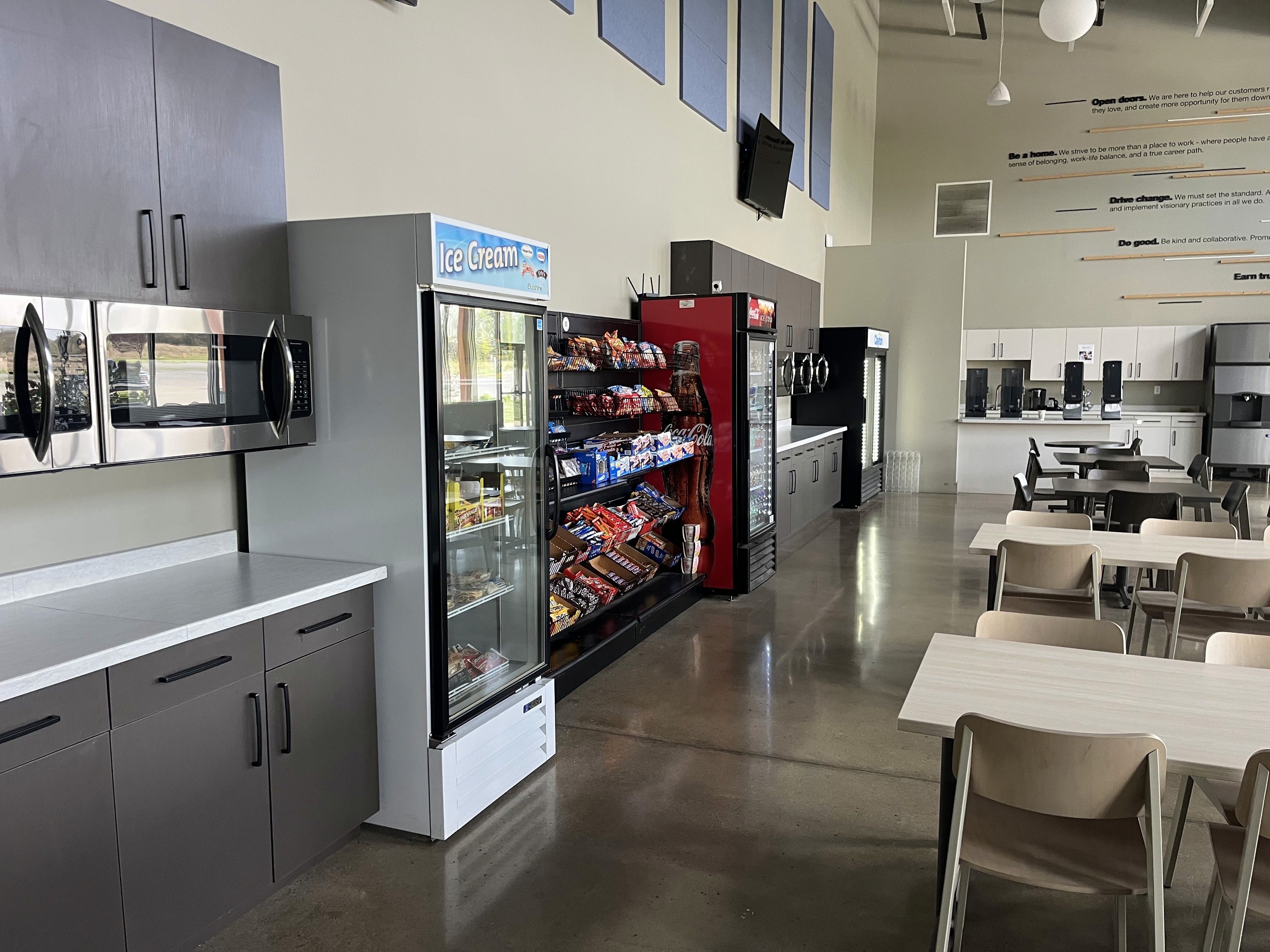
What We Installed
For this facility, we designed the micro market around the cafeteria space and the needs of a workforce running multiple shifts.
2 Coolers
1 Freezer
Snack Shelving
Self-Checkout Kiosk
What Changed After Installation
Employees stopped leaving the building
When there's fresh food, real variety, and competitive pricing on-site, there's no reason to drive to a gas station or fast food restaurant during a 30-minute break.
Break times became actual breaks
Instead of rushing off-site and eating in the car, employees walk to the cafeteria, grab a sandwich and a drink, and sit down. A better break means better second-half productivity.
Product selection improved over time
The kiosk tracks what sells. Items that sat on shelves got replaced. Items that sold out fast got restocked more frequently. After a few months, the market was dialed in to exactly what this team wanted.
Zero management from the facility
The facility manager doesn't order products, restock shelves, fix equipment, or handle payments. We do all of it. The only interaction is an occasional request — and we handle it on the next visit.